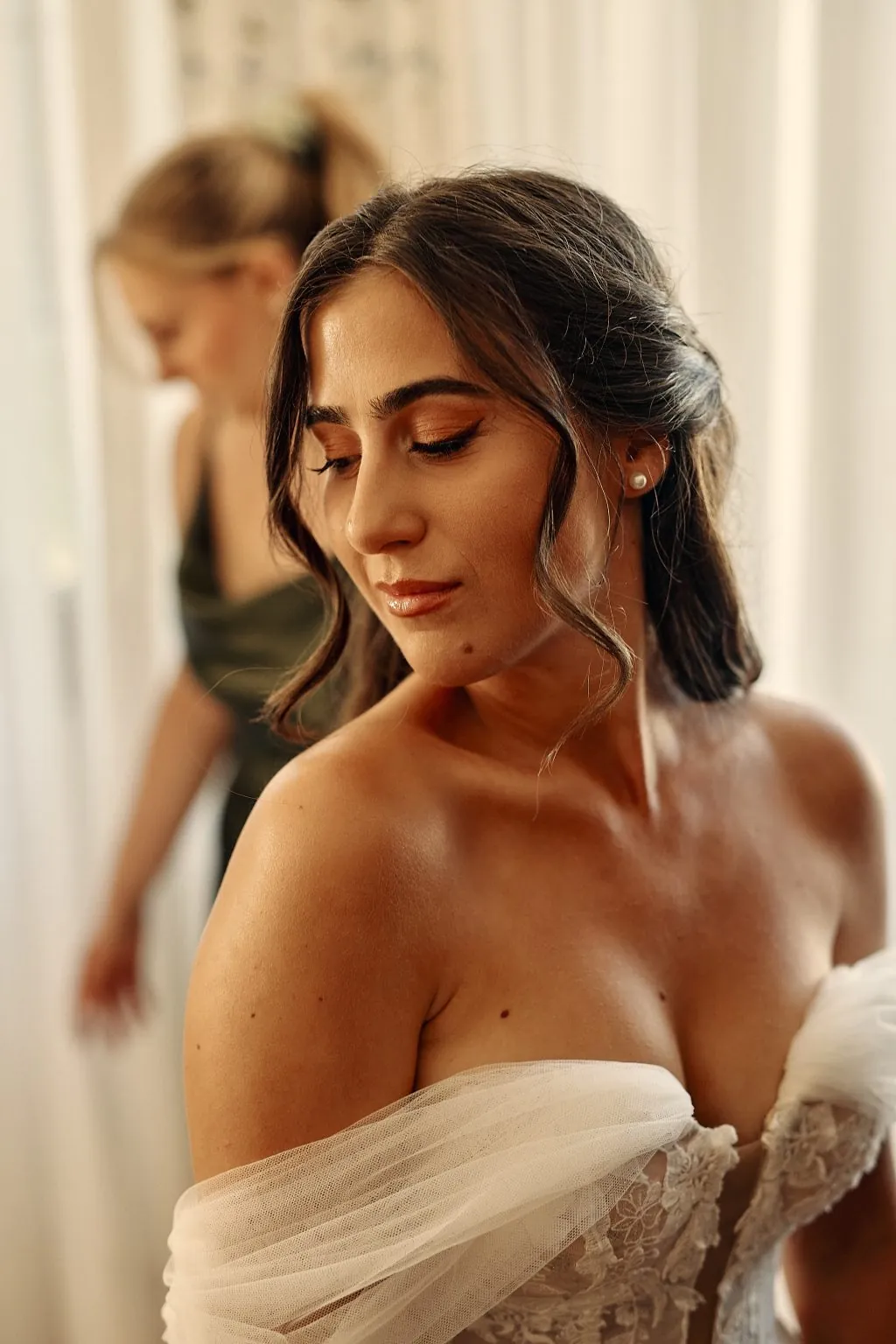
There's no single right style. What decides it is your dress, your hair as it really is, and the weather of your day. Start with the dress. Trends come second.
Start with the neckline
| Your dress | What works |
|---|---|
| Strapless or sweetheart | Both. Waves down soften the shoulders, a low bun shows them. |
| High neck or a lace back | Hair up, so the detail of the dress shows. |
| Open back | A sleek bun or a half-up style. |
| Simple satin or crepe | A clean, sleek low bun or a polished ponytail. |
One more check: look at the style from behind. At the ceremony, most guests and the photographer see the back of your head.
The styles, and how they behave outside
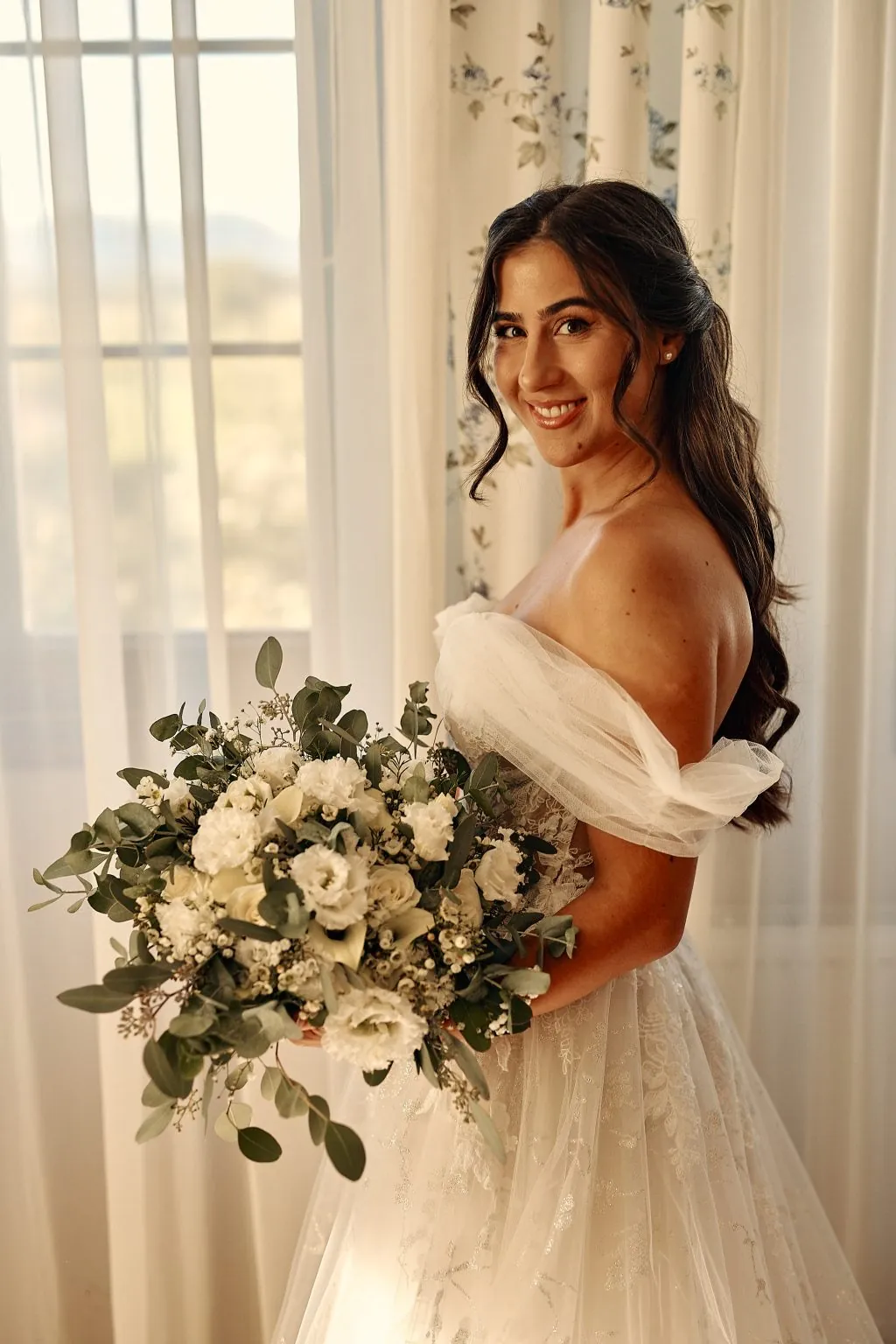
Loose texture and a few face-framing pieces. It looks effortless and needs a lot of structure underneath. It softens a little in humidity, which suits it.
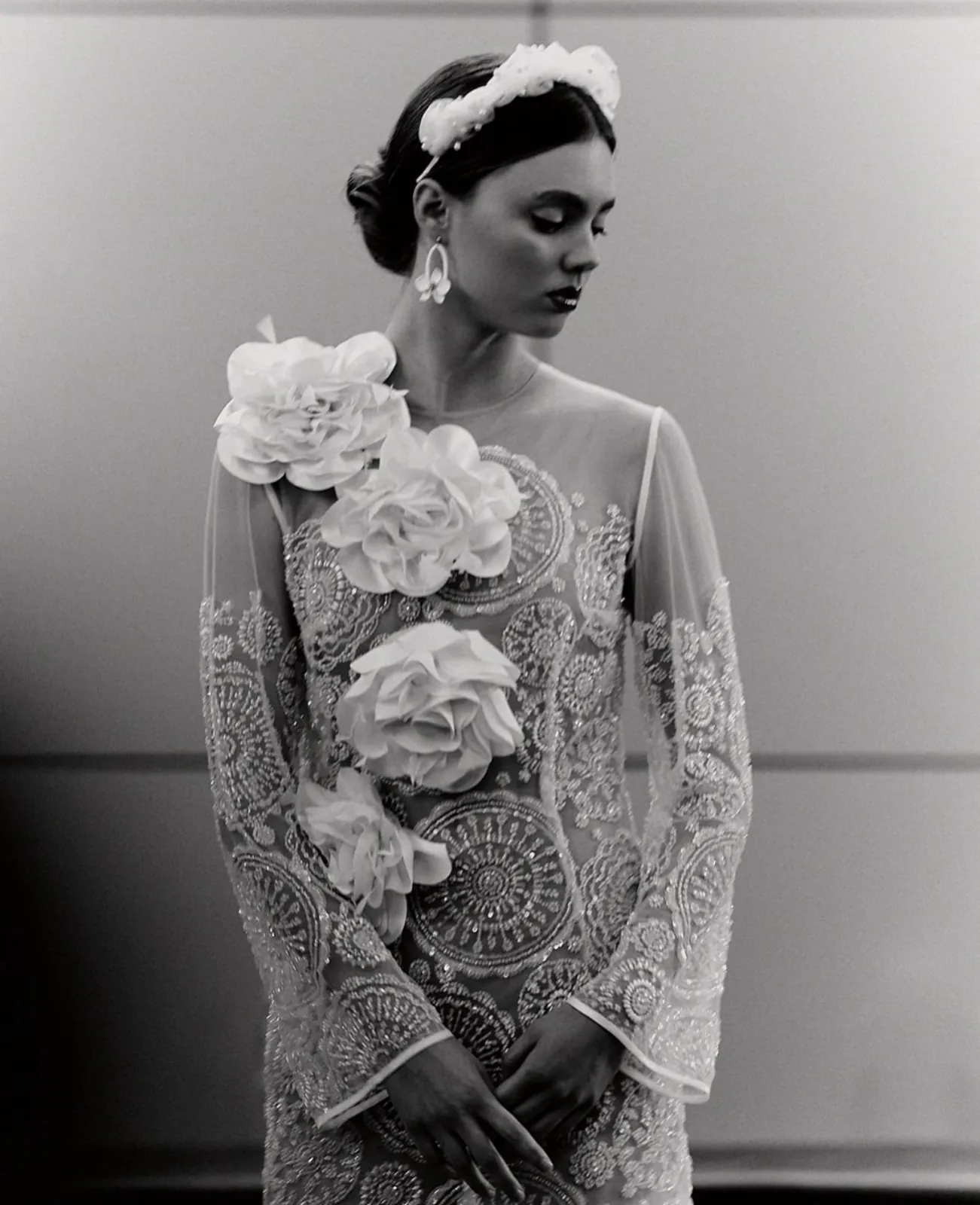
Clean and very elegant. Wind hardly touches it, which makes it the safest choice for a castle terrace.
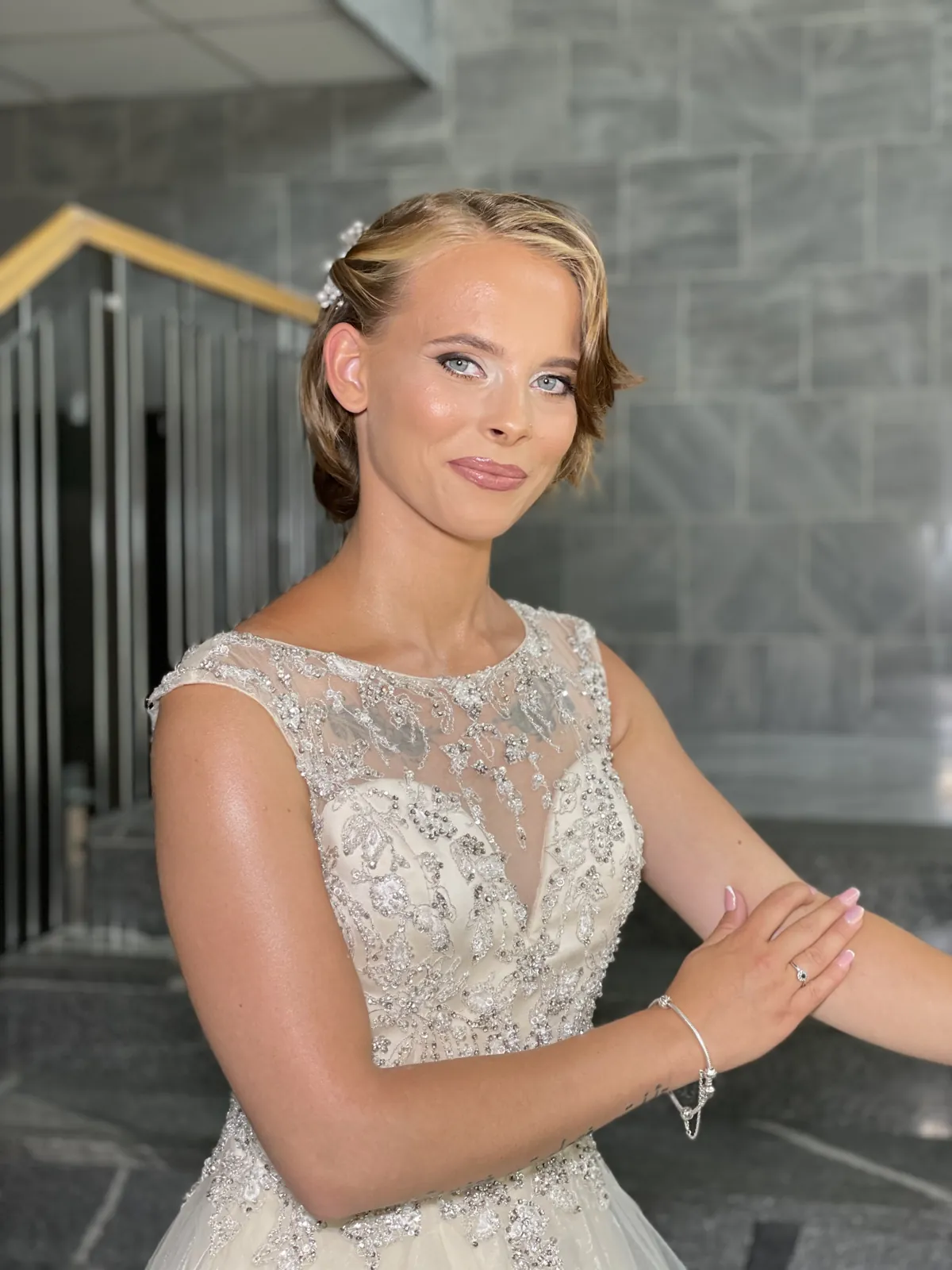
Shows your length and waves. In heat and humidity curls drop faster, so it needs more hold and a plan for the evening.
Beautiful, and the most work on a hot day. It needs more structure to last.
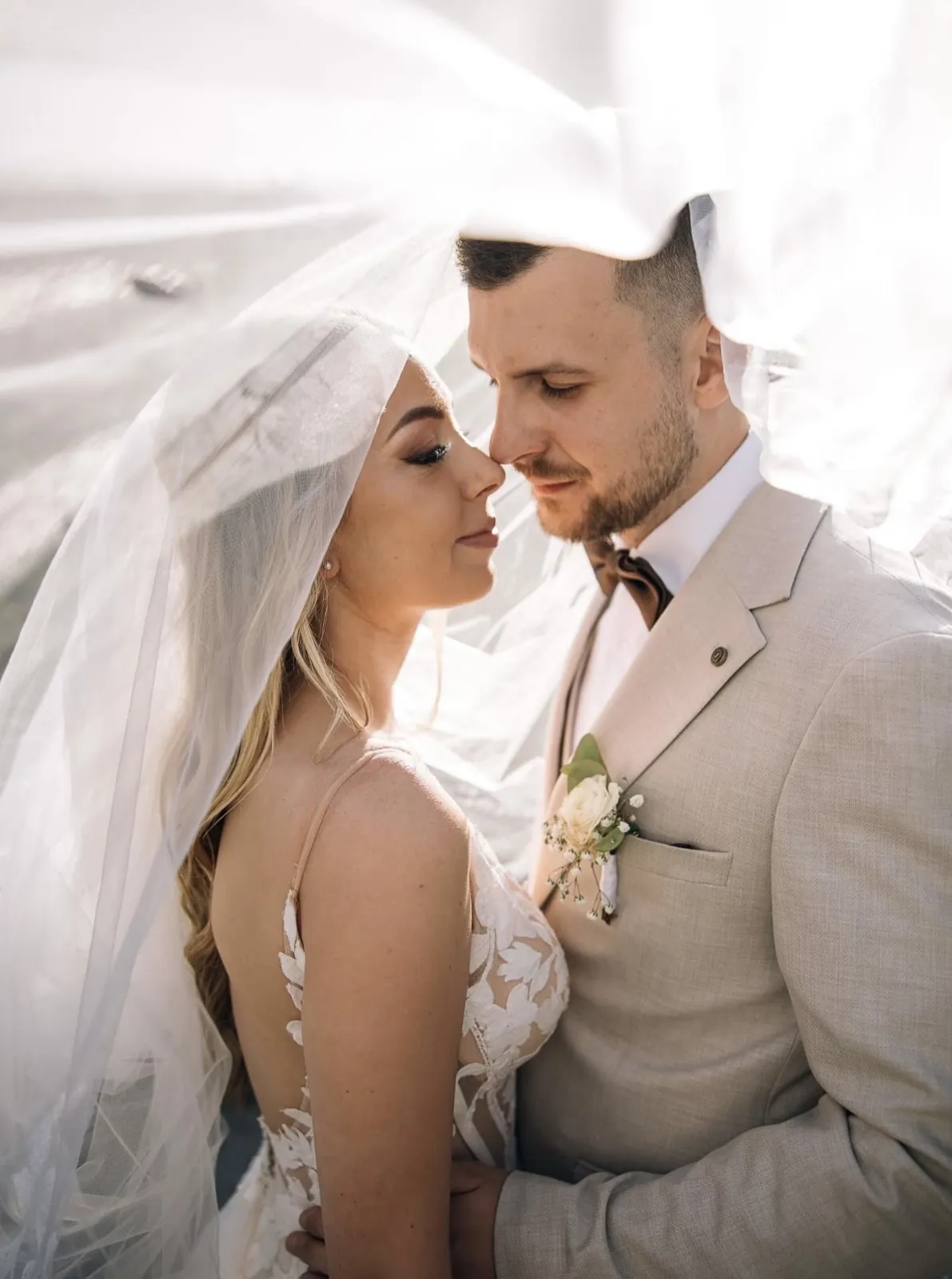
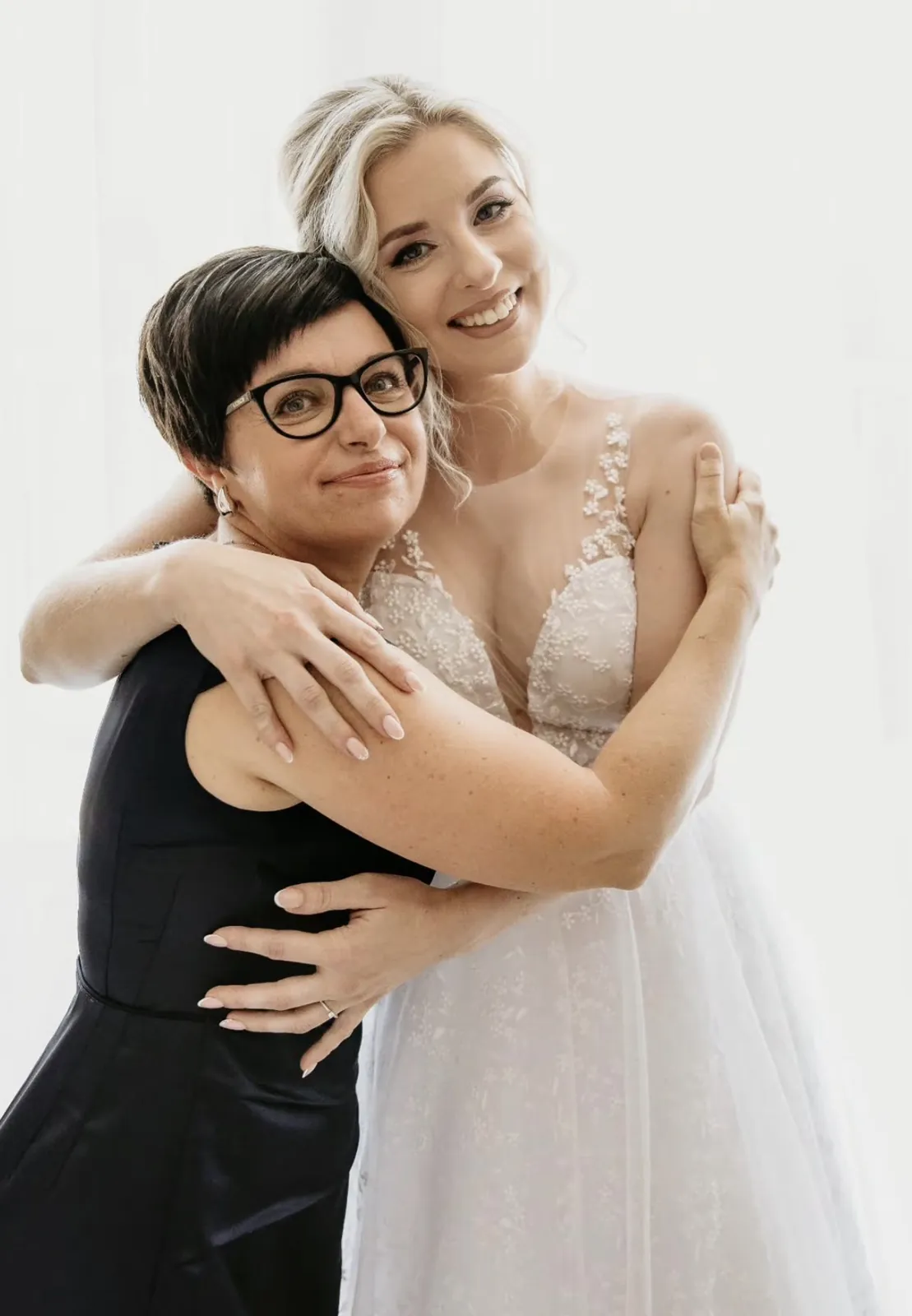
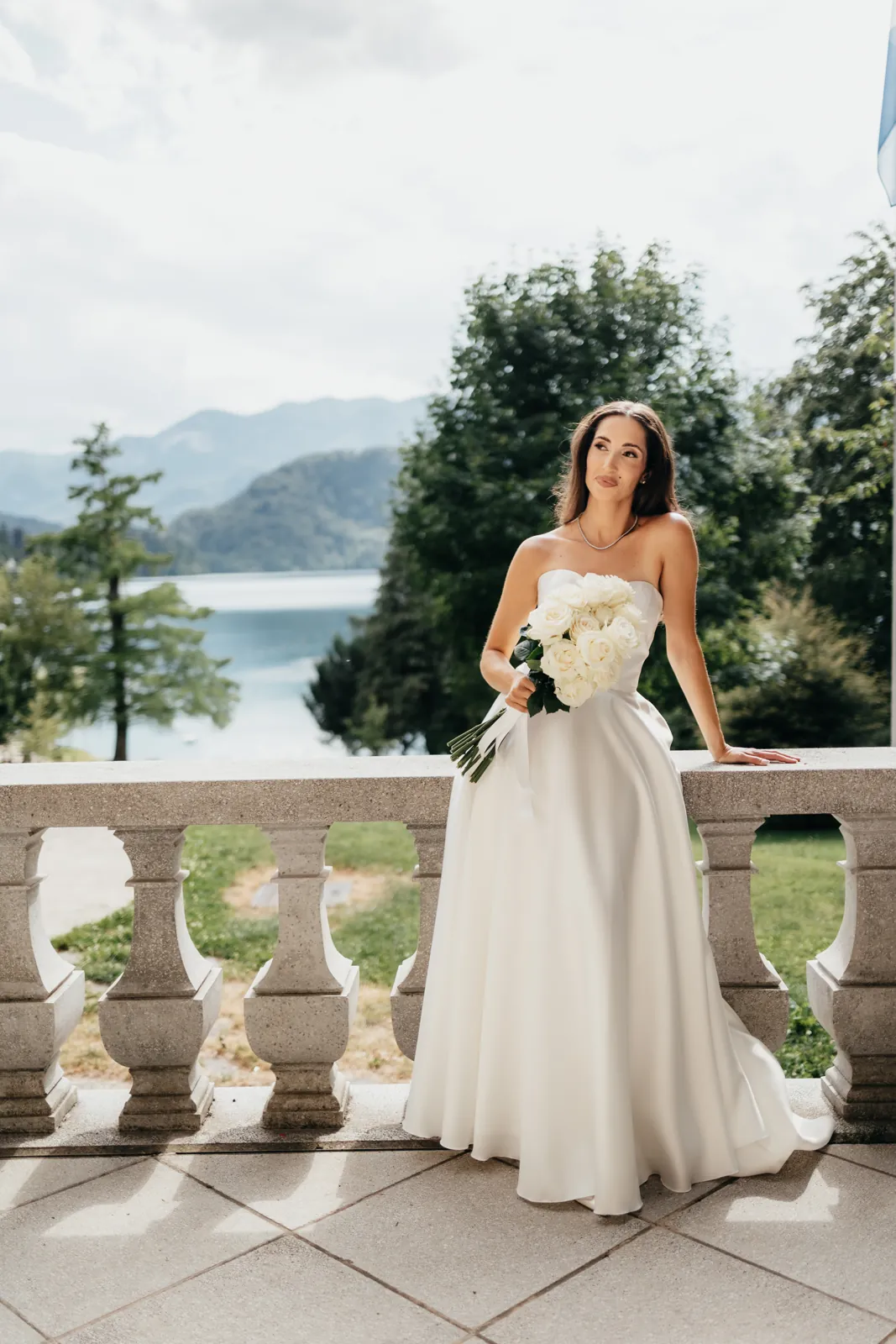
Your hair, as it is
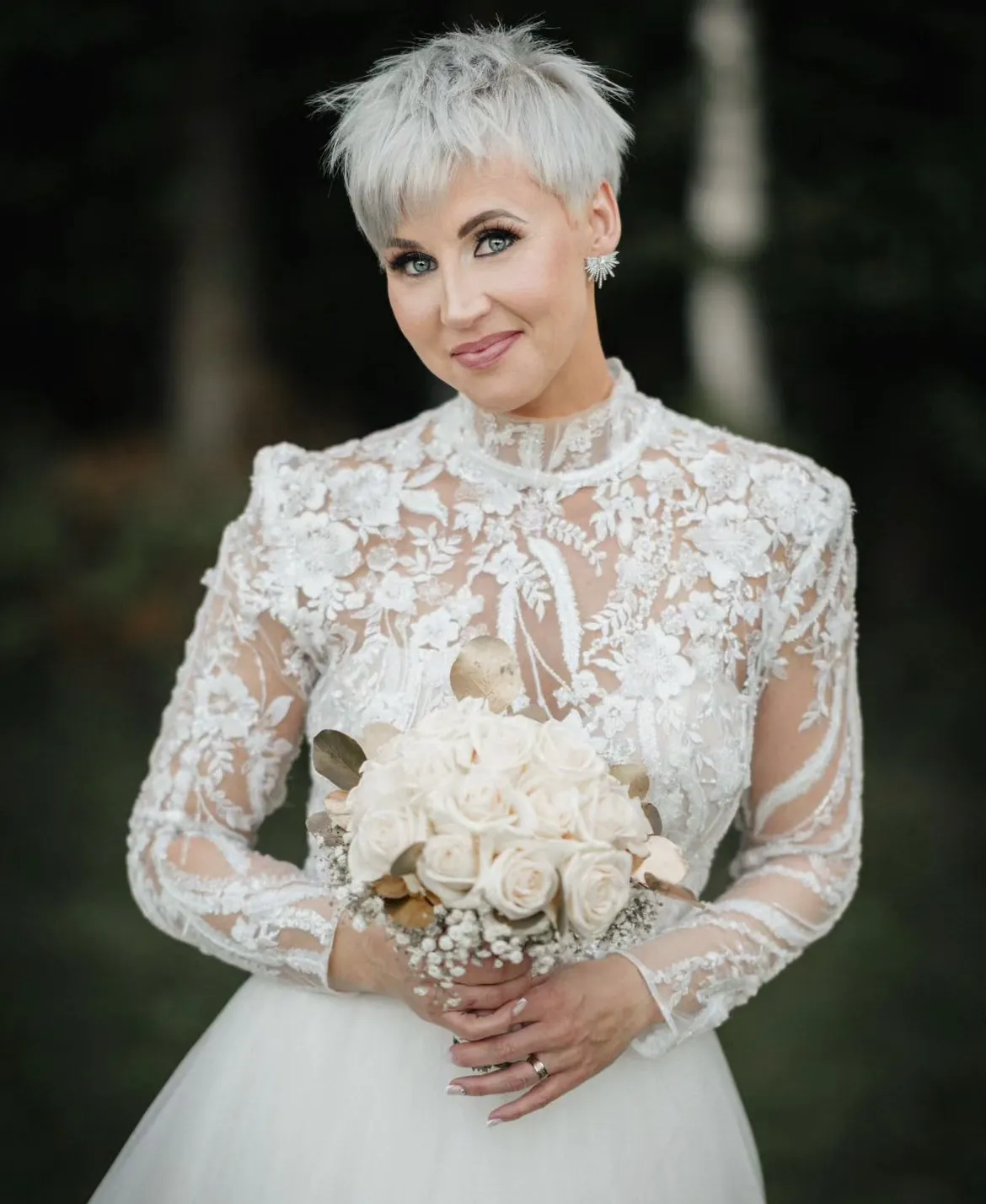
- Fine hair needs texture before volume. Good prep, some backcombing at the roots and a soft, loosely pinned style give it body that lasts.
- Curls are an advantage. Curly hair holds pins and shape better than straight hair, so the style works with it.
- Thick, heavy hair needs a secure base, especially for an updo.
- Extensions only if the style you love needs more length or fullness than you have. Bring them to the trial so they can be blended and placed.
A veil that stays
The veil is pinned into the structure of the style, not just into the hair on top. That's what keeps it in place in the wind and through the ceremony. Long cathedral veils are stunning outside, but they're heavy and catch every breeze. If you want to take the veil off after the ceremony, the style is planned to look finished without it.
Bows, pearls, combs and fresh flowers are all lovely. One statement piece is enough, placed in the structure of the style. A bow can even replace the veil.
Soft waves that drop a little by evening are normal. A style that falls apart in the first hour is not.
Wind, humidity and rain
Hair is planned for the forecast. For a windy castle or lakeside terrace, or a boat to Bled Island: more structure and hold. For a humid day by the lake or the sea: a style that still looks pretty as it softens. If rain is likely, choose a style that can take it, and agree on a plan B at your trial so nothing is decided in a panic.
One person, or two?
Izidora does both bridal hair and makeup. If she does both for you, plan a little more time in the morning, since one person does everything. If you'd rather have a separate hairstylist, that's fine too, and she's happy to recommend one. Either way, hair and makeup should be planned together so the whole look matches.
Before the day
- A trim about a month before, for healthy ends, especially if you wear your hair down.
- The last colour and cut 1–2 weeks before.
- Bring your veil, accessories and extensions to the trial.
- Wash your hair when you agreed at the trial. Many styles hold better on hair washed the evening before.
- Skip heavy conditioner near the roots.
Questions brides ask
Which bridal hairstyle lasts best in wind and humidity?
An updo or a sleek low bun. Loose waves drop faster in humidity, so they need more hold and a plan for the evening.
Can I do the hair and makeup trials together?
Yes, and it's the best way to see the whole look at once.
Should I wash my hair on the wedding morning?
It depends on your hair and the style. You decide at the trial. Many styles hold better on hair washed the evening before.